Skip to content
New Delhi, Delhi, 110025

Business hours

Law Office of R. Siddiqui

Monday
24 hours
Tuesday
24 hours
Wednesday
24 hours
Thursday
24 hours
Friday
24 hours
Saturday
24 hours
Sunday
24 hours

You can anytime during the day with your query.

8445111102

Latest Posts & Updates

Fresh stories, announcements and offers about Divorce Lawyer, Lawyer, Legal services, straight from our business.

Neha Tyagi v. Lieutenant Colonel Deepak

Tyagi (2021) A father’s duty and responsibility to keep his child until they reach the age of majority cannot be excused. It is also undeniable that the child has a right to be cared for in accordance with his father’s position. This was observed by division bench judges comprising of Hon’ble Justices Mukeshkumar Rasikbhai Shah and A.S. Bopanna of the Supreme Court of India. Facts of the case. The facts of the case are that the appellant and respondent were married and had a son out of wedlock. A disagreement erupted between the husband and wife, and the appellant-wife filed a number of complaints against the respondent- husband along with his employer, the Army Authorities. The complaints included the respondent’s extramarital affairs as well. The respondent-husband filed a divorce petition against the appellant-wife in the learned Family Court of Jaipur, alleging cruelty and desertion by the appellant. On May 19, 2008, the learned Family Court issued a decision dissolving the marriage between the appellant and the respondent based on cruelty and desertion by the appellant-wife. The appellant, in this case, filed an appeal with the High Court, feeling offended and unhappy with the ruling. The High Court dismissed the said appeal and upheld the decision and decree of the learned Family Court in the contested judgement and order. As a result, at the request of the appellant-wife, the present appeal was filed in the SC.

Neha Tyagi v. Lieutenant Colonel Deepak post imageRead full post

*Section 439 CRPC NDPS ACT Section 21 Arms Act, Section 25 Regular bail Record shows that on…

*Section 439 CRPC NDPS ACT Section 21 Arms Act, Section 25 Regular bail Record shows that on basis of secret information, raid was conducted in field of 'K’ and recovery of 2 Kgs heroin, one 30 bore pistol made in China, 02 magazines and 12 live cartridges came to be effected from fields - Petitioner and his co-accused duly named in FIR - Antecedents of petitioner clearly establish beyond doubt that he is habitual offender with multiple cases under NDPS Act -Thus, satisfaction under Section 37 of NDPS Act that petitioner not committed offence and it is not likely to commit one in future cannot be recorded - Present case is a clear case of narco terrorism - Therefore, no grant of regular bail. [Para 7]*_ _*धारा 439 सीआरपीसी एनडीपीएस अधिनियम धारा 21 शस्त्र अधिनियम, धारा 25 नियमित जमानत रिकॉर्ड से पता चलता है कि गुप्त सूचना के आधार पर, 'के' के क्षेत्र में छापा मारा गया और खेतों से 2 किलोग्राम हेरोइन, एक 30 बोर की चीन में बनी पिस्तौल, 02 मैगजीन और 12 जिंदा कारतूस बरामद किए गए - याचिकाकर्ता और उनके सह-आरोपी क

*Section 439 CRPC NDPS ACT  Section 21  Arms Act, Section 25  Regular bail  Record shows that on… post imageRead full post

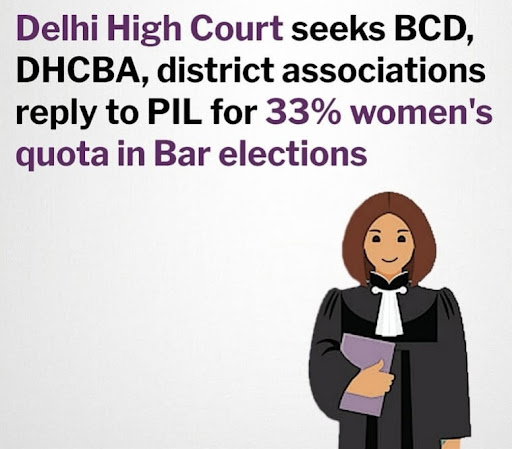
The Delhi High Court on Thursday issued notices to the Bar Council of Delhi (BCD), the Delhi High…

The Delhi High Court on Thursday issued notices to the Bar Council of Delhi (BCD), the Delhi High Court Bar Association (DHCBA) and all the district bar associations of the capital on a plea seeking 33% reservation for women in all Bar elections. Counsel for the petitioner said that there are thousands of women lawyers practising in Delhi, and lack of their representation in bar associations is a major concern.

The Delhi High Court on Thursday issued notices to the Bar Council of Delhi (BCD), the Delhi High… post imageRead full post

Home Ministry Issues SOP on Zero FIR and E-FIR Under BNSS.

In a landmark move to modernize India’s criminal justice system, the Home Ministry has issued a new set of Standard Operating Procedures (SOPs) for the implementation of Zero First Information Report (Zero FIR) and electronic First Information Report (e-FIR) under the Bharatiya Nagarik Suraksha Sanhita (BNSS), 2023. These new protocols aim to enhance the accessibility, efficiency, and responsiveness of law enforcement agencies in handling criminal complaints. 1. Streamlining FIR Registration: Making the process accessible to all citizens. 2. Timely Handling of Complaints: Ensuring efficient and prompt action on reported incidents. 3. Transparency and Accountability: Maintaining a clear and accountable system for FIR management. What is Zero FIR? Zero FIR allows any police station, irrespective of the location of the incident, to register a FIR. This means that victims of crimes can report incidents at any police station, without the limitations of jurisdiction, ensuring immediate action.

Home Ministry Issues SOP on Zero FIR and E-FIR Under BNSS. post imageRead full post

जज भगवान नहीं हैं – इलाहाबाद हाई कोर्ट के वकील जजों को “माई लॉर्ड” या “योर लॉर्डशिप” नहीं कहेंगे…

जज भगवान नहीं हैं – इलाहाबाद हाई कोर्ट के वकील जजों को “माई लॉर्ड” या “योर लॉर्डशिप” नहीं कहेंगे – बार एसोसिएशन ने प्रस्ताव पारित किया । इलाहाबाद हाई कोर्ट बार एसोसिएशन ने जजों के वकीलों के प्रति व्यवहार और कोर्ट की परंपराओं और प्रथाओं का पालन न करने सहित विभिन्न मुद्दों पर इलाहाबाद हाई कोर्ट, प्रयागराज में हड़ताल का आह्वान किया है। वकील अब “माई लॉर्ड” या “योर लॉर्डशिप” का उपयोग नहीं करेंगे 1. जजों के संबोधन में परिवर्तन: वकील अब जजों को “माई लॉर्ड” या “योर लॉर्डशिप” के रूप में संबोधित नहीं करेंगे। यह निर्णय भारत के मुख्य न्यायाधीश द्वारा दिए गए बयान के बाद लिया गया है, जिसमें उन्होंने कहा था कि जजों को खुद को भगवान नहीं समझना चाहिए। यह भी निर्णय लिया गया कि राज्य भर के सभी बार एसोसिएशनों से संपर्क किया जाएगा ताकि विभिन्न अदालतों में वकीलों के खिलाफ बढ़ते दुर्व्यवहार की घटनाओं को संबोधित किया जा सके।

जज भगवान नहीं हैं – इलाहाबाद हाई कोर्ट के वकील जजों को “माई लॉर्ड” या “योर लॉर्डशिप” नहीं कहेंगे… post imageRead full post

Divorce Can be Granted Where After One Year of Restitution of Conjugal Rights Decree, Parties Hav…

Divorce Can be Granted Where After One Year of Restitution of Conjugal Rights Decree, Parties Have Not Cohabited: Supreme Court. The Supreme Court has ruled that if parties do not cohabit for one year after a decree of restitution of conjugal rights, divorce can be granted. This landmark judgment was delivered in the case of X vs. Y (Civil Appeal No. 3894 of 2018) by a bench comprising Justices Sanjiv Khanna and M.M. Sundresh. The case originated when the husband filed for divorce in 2011, citing cruelty and desertion. The wife contested the petition and filed for restitution of conjugal rights. The trial court granted the restitution decree in 2012, but the parties did not resume cohabitation. In 2013, the husband filed a fresh divorce petition. Key legal issues addressed by the court included: 1. Interpretation of Section 13(1A)(ii) of the Hindu Marriage Act. 2. The effect of non-cohabitation after a restitution decree. 3. The relevance of the reason for non-cohabitation The Apex Court held that under Section 13(1A)(ii), either party can seek divorce if there has been no restitution of conjugal rights for one year or more after the passing of a decree. The court emphasized that the provision does not require examination of the reasons for non-cohabitation. Justice Khanna observed, “The legislature has not stipulated that the court should examine whether there was a reasonable cause or excuse for not complying with the decree for restitution of conjugal rights”

Divorce Can be Granted Where After One Year of Restitution of Conjugal Rights Decree, Parties Hav… post imageRead full post

Law Firms

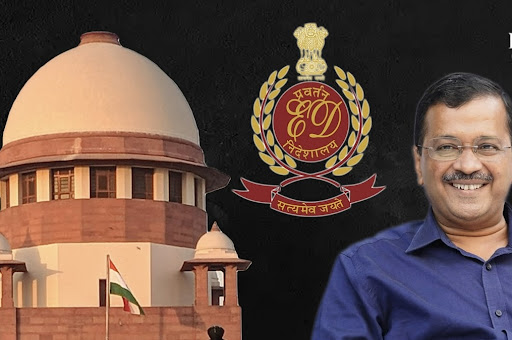
Apprentice Lawyer Legal Jobs हिंदी ಕನ್ನಡ News Supreme Court grants interim bail to Arvind Kejriwal; refers legal question on PMLA to larger bench A Bench of Justices Sanjiv Khanna and Dipankar Datta stated that certain legal questions raised by Kejriwal in his plea challenging his arrest need to be considered by a larger bench of the top court. Arvind Kejriwal, Supreme Court and ED Arvind Kejriwal, Supreme Court and ED Debayan Roy Published on: 12 Jul 2024, 10:43 am 2 min read In a significant development, the Supreme Court on Friday granted interim bail to Delhi Chief Minister (CM) Arvind Kejriwal in the money laundering case initiated by the Enforcement Directorate (ED) in relation to the now scrapped Delhi Excise Policy [Arvind Kejriwal v. Directorate of Enforcement] A Bench of Justices Sanjiv Khanna and Dipankar Datta stated that certain legal questions raised by Kejriwal in his plea challenging his arrest need to be considered by a larger bench of the top court. Hence, while referring the same to a larger bench, the Court deemed it fit to release Kejriwal on interim bail. "Given that right to life is concerned and since matter is referred to larger bench, we direct Arvind Kejriwal to be released on interim bail," the Court ordered. However, despite getting bail in the ED case, Kejriwal will continue to remain in jail since he is in custody in the case initiated by the Central Bureau of Investigation (CBI).

Law Firms post imageRead full post

Justice Nagarathna made this observation in her judgment wherein she ruled that a divorced Muslim…

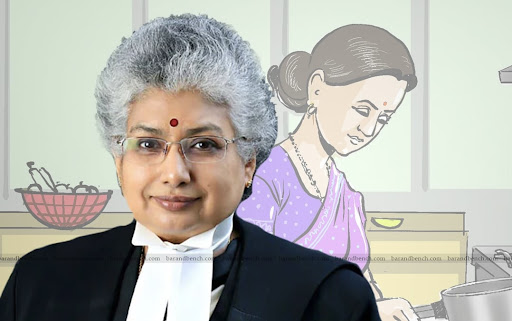
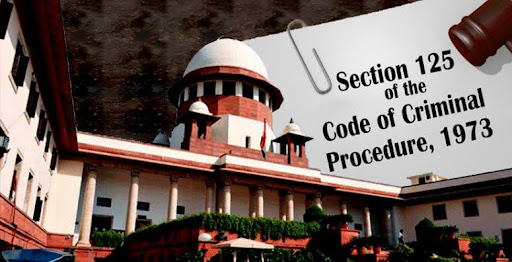
Justice Nagarathna made this observation in her judgment wherein she ruled that a divorced Muslim woman can file a claim for maintenance under Section 125 of the Criminal Procedure Code (CrPC) against her former husband. Case title [Mohd Abdul Samad v. State of Telangana and Others]. Justice Nagarathna made this observation in her judgment wherein she ruled that a divorced Muslim woman can file a claim for maintenance under Section 125 of the Criminal Procedure Code (CrPC) against her former husband. "Most married men in India do not realise this aspect of the predicament such Indian homemakers face as any request made for expenses may be bluntly turned down by the husband and/or his family. A wife who is referred to as a homemaker is working throughout the day for the welfare of the family without expecting anything in return except possibly love and affection, a sense of comfort and respect from her husband and his family which are towards her emotional security," she observed while highlighting the plight of such women. On the position of such women, Justice Nagarathna was of the view that despite them getting judicial recognition for their contributions, the services and sacrifices they make for their family remain uncompensated. She, therefore, urged husbands to become conscious of the fact that they have to provide for their wives, who do not have an independent source of income by giving them access to his financial resources.

Justice Nagarathna made this observation in her judgment wherein she ruled that a divorced Muslim… post imageRead full post

Prosecuting Agency Shouldn’t Oppose Bail On the Ground of Seriousness Of Offence, If They Can’t E…

Prosecuting Agency Shouldn’t Oppose Bail On the Ground of Seriousness Of Offence, If They Can’t Ensure Speedy Trial: Supreme Court. New Delhi, July 3, 2024 – In a landmark decision, the Supreme Court of India ruled that prosecuting agencies should not oppose bail on the seriousness of the offence if they cannot ensure a speedy trial. The decision was rendered in the case of Javed Gulam Nabi Shaikh vs. State of Maharashtra & Anr., Criminal Appeal No. 2787 of 2024, by a bench comprising Hon’ble Mr. Justice J.B. Pardiwala and Hon’ble Mr. Justice Ujjal Bhuyan. The appellant, Javed Gulam Nabi Shaikh, had been in custody for over four years without the trial progressing to the framing of charges. He was apprehended by Mumbai Police on February 9, 2020, at Chhatrapati Shivaji Maharaj International Airport with 1,193 counterfeit Indian currency notes of the denomination of Rs 2,000. Following his arrest, the National Investigation Agency (NIA) took over the investigation, and a case was registered under multiple sections of the Indian Penal Code and the Unlawful Activities (Prevention) Act, 1967 (UAPA).

Prosecuting Agency Shouldn’t Oppose Bail On the Ground of Seriousness Of Offence, If They Can’t E… post imageRead full post