Skip to content
New Delhi, Delhi, 110025

Business hours

Law Office of R. Siddiqui

Monday
24 hours
Tuesday
24 hours
Wednesday
24 hours
Thursday
24 hours
Friday
24 hours
Saturday
24 hours
Sunday
24 hours

You can anytime during the day with your query.

8445111102

Latest Posts & Updates

Fresh stories, announcements and offers about Divorce Lawyer, Lawyer, Legal services, straight from our business.

You Are So Educated, You Should Earn for Yourself”: Supreme Court to MBA Qualified Demanding ₹12…

You Are So Educated, You Should Earn for Yourself”: Supreme Court to MBA Qualified Demanding ₹12 Crore Alimony for 18-Month Marriage. The Supreme Court of India, while hearing a matrimonial dispute, strongly questioned an MBA-qualified woman’s demand for a house and ₹12 crore in alimony after a marriage that lasted only 18 months. A bench headed by Chief Justice of India B.R. Gavai observed that a highly educated woman cannot choose to sit idle and must also work. The court has reserved its order after proposing a settlement involving either a flat or a lump sum of ₹4 crore, coupled with the quashing of an FIR against the wife. The matter before the Supreme Court arose from a matrimonial dispute between a couple whose marriage lasted for approximately 18 months. The husband had sought a decree of nullity, alleging that his wife was schizophrenic. In response, the wife filed for maintenance, leading to a legal battle over the quantum of alimony. The wife, an MBA graduate and IT professional, brought her claim for a substantial settlement to the apex court. The apex court said : You’re an IT person. You’ve done your MBA. You’re in demand… Bengaluru, Hyderabad… Why don’t you work also?” CJI Gavai asked. The bench also clarified the scope of her claims, stating, “But understand you cannot claim the properties of his father also.” To know more call on the given no. Best Matrimonial Lawyer in Delhi NCR. Best Divorce lawyer in Delhi. Best Criminal lawyer in Delhi.

You Are So Educated, You Should Earn for Yourself”: Supreme Court to MBA Qualified Demanding ₹12… post imageRead full post

No Arrest in 498A IPC Case For 2 Months – SC Approves Guidelines of Allahabad HC on Misuse of 498…

No Arrest in 498A IPC Case For 2 Months – SC Approves Guidelines of Allahabad HC on Misuse of 498A IPC. In a landmark judgment aimed at curbing the misuse of Section 498A IPC and safeguarding the rights of both parties in matrimonial disputes, the Supreme Court of India has upheld and approved the guidelines framed by the Allahabad High Court in a Judgment delivered by Justice Rahul Chaturvedi in Criminal Revision No. 1126 of 2022 , which mandates a “cooling-off period” of two months before any arrest is made in a 498A case. The ruling was delivered in the case of Shivangi Bansal vs. Sahib Bansal [Transfer Petition (C) No. 2367 of 2023] and connected matters. The verdict was authored by Justice Augustine George Masih and concurred by Chief Justice of India B.R. Gavai. Multiple litigations followed across Delhi and Uttar Pradesh, including criminal complaints under Section 498A IPC, domestic violence cases, maintenance petitions, and transfer petitions filed by both parties. In total, over 20 cases were listed and examined by the court. Key Legal Issues:- * Whether criminal proceedings and arrests under Section 498A IPC can be deferred to avoid misuse of the provision. * Whether pending litigations between the parties could be quashed through mutual settlement. * Whether the Allahabad High Court’s guidelines on the constitution and functioning of Family Welfare Committees (FWC) are valid and enforceable. Best Divorce and Criminal lawyer in delhi. For legal Advice.

No Arrest in 498A IPC Case For 2 Months – SC Approves Guidelines of Allahabad HC on Misuse of 498… post imageRead full post

🏛️ ( DELHI HIGH COURT) Hindu Marriage Act, Section 13B(2) Divorce by mutual consent - Withdrawal…

🏛️ ( DELHI HIGH COURT) Hindu Marriage Act, Section 13B(2) Divorce by mutual consent - Withdrawal of consent before decree - Held, consent for mutual consent divorce must persist till decree is passed - Withdrawal of consent before decree is a statutory right, and such withdrawal cannot be treated as contempt. [Paras 65, 67, 71] Contempt of Courts Act, Section 2(b) Settlement Agreement - Matrimonial dispute - Scope of contempt jurisdiction - Held, contempt jurisdiction cannot be invoked to enforce terms of Settlement Agreement that depend on mutual consent or external factors - Breach of such agreement does not ipso facto constitute contempt. [Paras 54, 68, 72] Best Divorce lawyer in Delhi. Law office of R. Siddiqui. Advocate & Consultant.

🏛️ ( DELHI HIGH COURT) Hindu Marriage Act, Section 13B(2) Divorce by mutual consent - Withdrawal… post imageRead full post

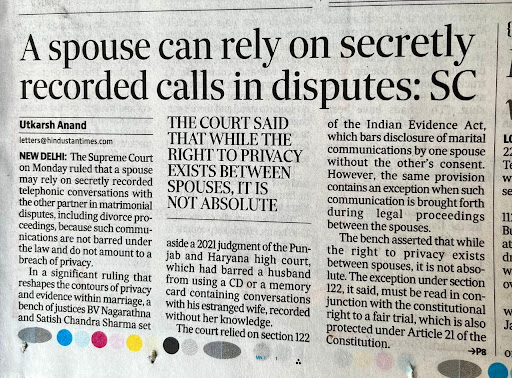
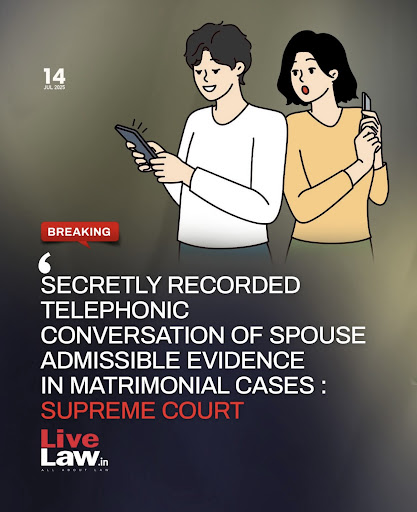
Supreme Court's Landmark Judgment: Phone Conversations Between Husband and Wife Can Be Used as Ev…

Supreme Court's Landmark Judgment: Phone Conversations Between Husband and Wife Can Be Used as Evidence in Court! The Supreme Court of India has recently delivered a significant judgment, ruling that phone conversations between husband and wife can be used as evidence in court. This decision is being seen as a new precedent in matrimonial cases. Key Points of the Judgment: - Right to Privacy Not Absolute: The court held that the right to privacy is a fundamental right, but it is not absolute. Reasonable restrictions can be imposed on it in the context of legal proceedings. - Recordings in Matrimonial Disputes: If there is a legal dispute between husband and wife, such phone recordings will not be considered a violation of privacy. - Right to Fair Trial: The court emphasized that every person has the right to a fair trial under Article 21 of the Constitution. If a party is prevented from presenting relevant evidence, it would be a violation of their right to a fair trial. Implications of the Judgment: - Guidelines for Family Courts : This judgment provides clear guidelines for family courts that such evidence can be admissible. - Protection of Rights: The judgment highlights the importance of following procedural safeguards to protect the rights of parties involved. Case Details: - Case Title: Vibhor Garg vs. Neha - Case Number: SLP(C) No. 21195/2021 [1] Best Matrimonial Lawyer in Delhi NCR.

Supreme Court's Landmark Judgment: Phone Conversations Between Husband and Wife Can Be Used as Ev… post imageRead full post

📘 What is Mubarat in Muslim Law?

• Mubarat (Arabic: “mutual release”) means both husband and wife agree they no longer wish to live together. • Once both parties agree and the husband accepts the wife’s offer of separation, marriage ends immediately. • It is irrevocable once pronounced and accepted. 🧾 Documents Required for Mubarat Divorce 1. Nikahnama (Marriage certificate) 2. ID Proofs of both spouses (Aadhaar, Passport, etc.) 3. Proof of Address 4. Mubarat Nama (Written agreement) 5. Photographs (passport-sized) 6. Affidavit declaring mutual consent 7. Settlement terms: • Custody of children (if any) • Maintenance/alimony (if applicable) • Return of dowry articles or settlement thereof ✍️ Sample Steps to Execute Mubarat (Mutual Divorce) Step 1: Mutual Discussion • Both parties agree to dissolve the marriage peacefully and voluntarily. Step 2: Draft a “Mubarat Nama” • A written document that includes: • Names and details of both spouses • Date of marriage and reason for divorce • Agreement to end marital ties • Terms of settlement (Mehr, custody, maintenance, etc.) Step 3: Sign in Presence of Witnesses • Two adult Muslim witnesses (preferably male, or one male and two females) Step 4: Optional: Notarize or Register • Though not required under personal law, it is advisable to notarize the Mubarat Nama or get it recorded in a court. Or file a declaration/Mutual Consent Divorce under Section 28 of the Special Marriage Act, 1954 in Family Court.

📘 What is Mubarat in Muslim Law? post imageRead full post

‘’Documents needed for Divorce’’

🪪 1. Identity & Address Proof (Both Parties) • Aadhaar Card • PAN Card • Passport • Voter ID • Driving License • Any government-issued ID 📜 2. Marriage Proof • Marriage Certificate (registered marriage preferred but not mandatory) • If unavailable: Wedding card + Photographs + Witness affidavit 🗂️ 3. Address Proof of Last Residence Together • Utility bills (electricity/water bill) • Rent agreement • Bank statement showing same address • Affidavit confirming cohabitation 🖼️ 4. Passport Size Photos • 2–4 passport-sized photographs of each party. 📝 5. Joint Divorce Petition (For Mutual Divorce) • Drafted under Section 13B of the Hindu Marriage Act • Signed by both spouses • Must clearly mention: • Marriage date and separation date • Grounds for divorce • Settlement terms (alimony, custody, property, etc.) 📑 6. Settlement Agreement (MoU – Memorandum of Understanding) • Especially in mutual consent divorce • Covers: • Child custody • Maintenance/alimony (if any) • Property/asset division • Permanent settlement terms • Future claims waiver ⸻ 🧾 7. Income Proof (Optional but Useful) • Salary slips or ITR of both parties 👶 8. Children-Related Documents (If Applicable) • Birth certificate of children • School ID/report cards (to support custody or visitation claims) ⸻ 🧾 9. Evidence of Separation • Separate residence proof (rental agreements, bills) • Affidavit of 1-year separation.

‘’Documents needed for Divorce’’ post imageRead full post

Steps to evict wife from husband’s property.

✅ CASE 1: Self-Acquired Property in Husband’s Name You can legally seek her eviction if: • The property is solely in your name • The relationship is strained or divorce is underway 🪪 Steps: 1. Send Legal Notice to vacate the house. 2. If she refuses, file a civil eviction suit (under Transfer of Property Act, 1882) in the civil court. 3. If she files a claim under Section 17 of the DV Act (right to residence), the court will decide whether she has any legal right to stay. 4. You may also seek an injunction under Section 39 of the Specific Relief Act to restrain her from interfering. ⚠️ Important: Even if you’re the sole owner, a wife can claim right to residence in a shared household under the Protection of Women from Domestic Violence Act, 2005. But she can’t claim ownership unless she proves contribution or part-ownership. ✅ CASE 2: Jointly Owned Property • If the wife is a co-owner, you cannot evict her without a partition or ownership suit. • You must file a partition suit in civil court and prove ownership contribution. ✅ CASE 3: Rented Property or In-Laws’ House • If the house is owned by in-laws (not husband) they can: 1. Issue a legal notice to vacate. 2. File for eviction under personal necessity. 3. File a case stating she is an unauthorized occupant. • Supreme Court in S.R. Batra v. Taruna Batra (2007) ruled: “A wife has no right to live in a property owned by in-laws if it’s not a shared household.”

Steps to evict wife from husband’s property. post imageRead full post

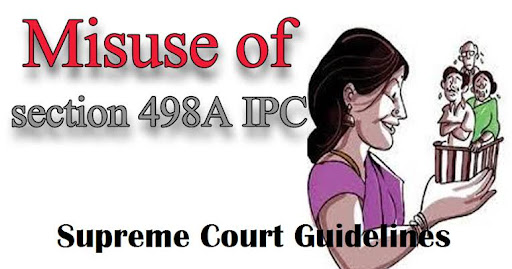
‘’498-A misuse legal protection

✅ 1. Apply for Anticipatory Bail (Section 438 CrPC) • If FIR is registered or likely to be filed, apply for anticipatory bail. ✅ 2. File Petition to Quash FIR (Section 482 CrPC) • If the FIR is clearly false or baseless, file a petition in the High Court under Section 482 CrPC to quash it. • You must provide evidence (like call recordings, chats, CCTV, etc.) that shows no cruelty was committed. ✅ 3. Use Supreme Court Guidelines – Arnesh Kumar v. State of Bihar (2014) • The Supreme Court ruled that: • Arrest is not mandatory in 498A cases. • Police must conduct a preliminary inquiry before arrest. • Magistrates must record reasons before ordering custody. ✅ 4. Complaint Against Wife for Filing False Case • You can file: • Section 182 IPC: False information to police, • Section 211 IPC: False charge with intent to injure, • Section 499/500 IPC: Defamation, • Section 120B IPC: Criminal conspiracy (if others are involved), • Section 177 IPC: False information furnished to a public servant. ✅ 5. File Divorce or Restitution Suit • If marriage is beyond reconciliation, you may initiate: • Divorce under cruelty ground (Section 13 of HMA), or (Muslim Law) • RCR – Restitution of Conjugal Rights (if wife left home without reason). ✅ 6. Use Evidence to Prove Innocence Collect and preserve: • Call recordings, • WhatsApp/text chats, • Videos, emails, • Witnesses who can support your side. NOTE:- 1. Do not ignore police summons.

‘’498-A misuse legal protection post imageRead full post

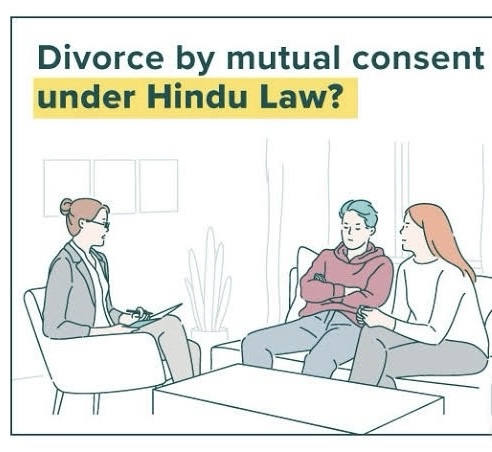
How to file mutual divorce in delhi.

✅ Eligibility Conditions 1. Marriage is under the Hindu Marriage Act, 1955 2. Both parties agree to divorce 3. They have lived separately for at least 1 year 4. No chance of reconciliation 📍Where to File File the petition in the Family Court having jurisdiction over: • Place of marriage, • Last place of living together, • Or where the wife is residing currently. Delhi Family Courts: Tis Hazari, Rohini, Karkardooma, Saket, Dwarka, Patiala House, Rouse Avenue, etc. 📑 Documents Required • Joint petition for divorce (under Section 13B) • Aadhaar cards or other valid ID proofs • Marriage certificate or proof of marriage (photos/invite if certificate unavailable) • Passport-size photos of both spouses • Proof of 1-year separation (affidavit, utility bills, etc.) • Memorandum of Understanding (MoU) detailing: • Alimony (if any) • Child custody (if applicable) • Property/asset division • Permanent settlement terms 🪪 Step-by-Step Process Step 1: Draft & File Joint Petition U/s 13B (1)(First Motion) Step 2: First Motion Hearing • Court records statements of both parties confirming consent and settlement. Step 3: Cooling-Off Period (6 months) • Settlement is done, • No pending disputes, • Both parties insist on quick divorce. Step 4: Second Motion • After 1-2 months (or waiver), file a second motion under Section 13B(2). Step 5: Divorce Decree Granted • Court Satisfied. • Divorce is official.

How to file mutual divorce in delhi.  post imageRead full post